Sudeki: Where Are They Now?

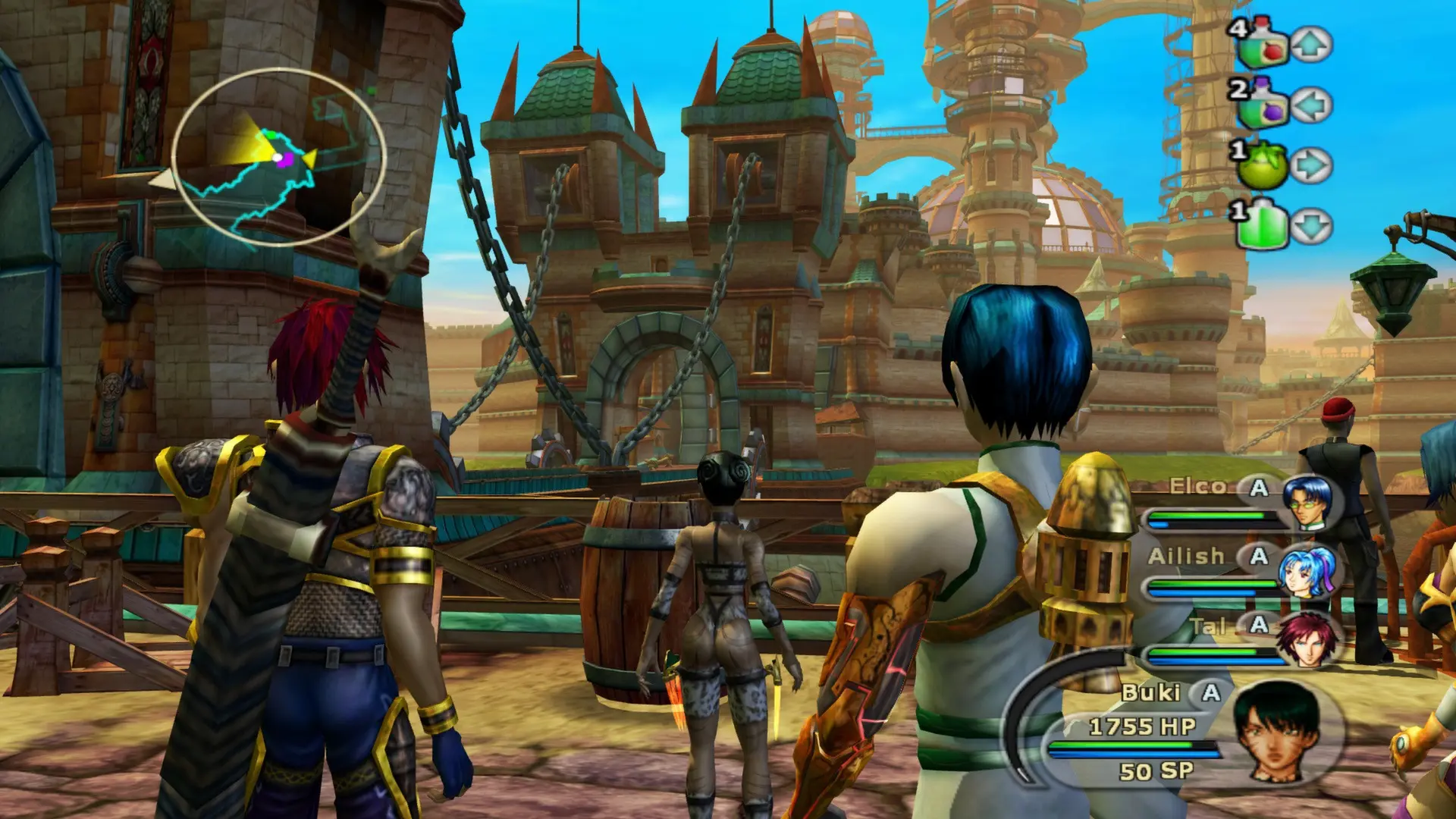
Note: The original interview with Game Director Jason Avent, conducted by Robbie “Fleshmaker” Coker while Sudeki was still in development, is preserved on the Internet Archive. The quotes below come from it.
Sudeki was Climax’s big swing at a Japanese style RPG for the original Xbox. Microsoft published it in 2004, hoping it would win over JRPG fans on a console that struggled in Japan. It never got a sequel, but it is still sold on PC today, and the studio behind it now works on some of the biggest games around. Here is the story of the game, what Jason Avent said about it before launch, and where everyone ended up.
What Sudeki Was
Sudeki is an action RPG with four playable heroes and a combat system that mixes real-time fighting with menu-based tactics. Climax first showed the idea in January 1999 as a Dreamcast project called Symphony of Light. It moved to PlayStation 2 in 2000, and full development on the Xbox version started in September 2000.
It was the largest project Climax had ever taken on. Between 50 and 70 people worked on it, more than half of the staff at Climax Solent. The game was re-announced at Microsoft’s X02 event in September 2002 and slipped from the 2003 holiday season into the summer of 2004.
Four Heroes, Three Worlds
The story is a war between a world of light and a world of darkness, with what Avent called “a twist in the tale”: you have to find out whether you are fighting for the right side. The light world is Haskilia, whose capital is Illumina, the dark world is Akloria, and the Realm of Shadows sits between them. Each world has its own monsters, characters and history.
Each of the four heroes plays differently in combat and opens a different kind of path:
| Hero | Who they are | Combat style | Exploration skill |
|---|---|---|---|
| Tal | A soldier of the Illumina Guard, the light world’s army, with a soft spot for Ailish | Heavy, slow melee weapons | Pushes and pulls large objects |
| Ailish | Princess of Illumina and daughter of Queen Lusica, of magical heritage | Short range magic | Sees and dispels illusions |
| Elco | A scientist building war machines | Rapid fire guns, medium range | Jetpack jumps across ravines |
| Buki | Half human, half cat, from Shadani Mo, whose people are old allies of Illumina | Fast claw attacks | Climbs sheer walls |
You control one hero at a time while the other three follow AI settings you can tune. Some enemies can only be beaten with a specific hero’s ability, so switching characters is part of the fight, not just a menu option.
What Jason Avent Said Before Launch
The interview took place before release, when the team was still describing the game it wanted to make. Avent summed up the goal in one line: “a blend of fast-paced arcade combat with the depth of a traditional RPG.” A few of his answers stand out now that the game has been out for two decades.
The OneTime System
Avent’s headline idea was OneTime. When you open a menu, the game does not pause. It keeps running at reduced speed while you pick your move. According to Avent, OneTime starts at 5% of full speed and speeds up to 40% as the game goes on, so you get less thinking time the further you get. He said it “creates some great Matrix style moments”, while keeping you “always under threat albeit at a more manageable speed.”
Four Tiers of Combat
Avent described combat in four tiers: basic light and heavy attacks with blocks and dodges, chained combos, Skill Attacks and Spirit Strikes. Skill Attacks are aimed spells that you cast “using the characters’ weapons as your magician’s wand.” Spirit Strikes are the big summons, which call on the gods and can be linked between characters. You charge your party up by “killing and maiming”, so long battles build toward the strongest moves.
He also stressed that every enemy type behaves differently and needs its own tactics. When two types turn up together, they “complement each other and make you think again.”
Squad Tactics and a Believable World
Having up to four heroes meant “four times the tactics available to you”, in Avent’s words. The other characters could give covering fire, draw enemy attention or go berserk while you fought. He called building a believable world, with its own history, the hardest part of the project. The team’s answer was creatures that wander the world on their own and recorded speech for every NPC.
Release and Reception
| Date | Event |
|---|---|
| September 2000 | Xbox development begins |
| 20 July 2004 | Xbox release in North America |
| 27 August 2004 | Xbox release in Europe |
| 25 March 2005 | PC version in Europe (Zoo Digital Publishing) |
| 14 July 2005 | Xbox release in Japan |
| 24 February 2014 | Steam release |
| 23 April 2014 | GOG release |
| 28 May 2020 | Removed from GOG |
| 25 March 2025 | Back on GOG |
Reviews
Critics were lukewarm. The Xbox version holds 72 on Metacritic, and scores ranged from 5/10 at Eurogamer and 6.5/10 at GameSpot to 7.8/10 at IGN. Reviewers liked the look of the game and the ambition of the combat, but few called it a classic.
Sales
Sales were modest. In NPD’s August 2004 report, Sudeki was the tenth best selling Xbox game in North America, with a little over 16,500 copies. In the UK it peaked at number 25 in the overall chart in its first month.
Japan was the market Microsoft cared most about, and it went worst. The Japanese release came almost a year later and sold just over 6,200 copies in total, making it the 78th best selling Xbox game there. Microsoft did try: the Japanese version had a star voice cast (Kenji Nojima, Mai Nakahara, Hikaru Midorikawa and Yū Asakawa) and cover art by manga artist Yamato Yamamoto.
Technical Work
On the technical side, Climax pushed the Xbox hard. The engine streamed data from the console’s hard drive to save memory, and lighting and shadows were tuned for different body types. Player characters had fifteen facial shapes for animation, and NPCs had eight.
The Sequel That Never Came
Shortly after launch in 2004, a Climax job listing mentioned “Sudeki 2” and fans assumed a sequel was in the works. The title turned out to be a typo. No sequel has ever been announced, and the modest sales made one unlikely from the start.
Where Are They Now?
Climax Studios
Climax did far better than Sudeki’s sales would suggest. In November 2004 it merged its London and Solent teams as Climax Action, and that team took over Silent Hill after the original Japanese team broke up. Silent Hill: Origins came out on PSP in October 2007 to good reviews, with a PS2 version in 2008. Silent Hill: Shattered Memories followed on Wii in 2009 and on PS2 and PSP in 2010. Climax called it a “re-imagining” of the first game, not a straight remake.
After its Kingston studio closed in February 2008, Portsmouth was Climax’s only remaining studio, and the company shifted toward co-development and porting work for other publishers. In April 2021, Keywords Studios bought Climax for up to £43 million: £27 million up front in cash and shares, plus up to £16 million more tied to growth targets. Climax had 109 staff at the time.
Today Climax has studios in Portsmouth, London, Edinburgh (opened in August 2024) and Liverpool. Its credits include the PC version of Returnal with Housemarque, Age of Empires IV, Wasteland 3, Mafia: Definitive Edition, New World, Microsoft Flight Simulator 2024 and Days Gone Remastered. It is also working on Exodus for Archetype Entertainment. You can see its current projects on the Climax Studios website.
Jason Avent
After Sudeki, Avent moved from RPGs to racing games. He directed Pure at Black Rock Studio, the Brighton racing studio, formerly Climax Racing, that Disney bought in 2007 and closed in 2011. That same year he founded Boss Alien, which made the mobile hit CSR Racing and was sold to NaturalMotion a year later.
In 2014 he invested in The Trailerfarm, a trailer and video studio that was later sold to Keywords Studios, the same group that now owns Climax. In February 2023 he announced Hardball Games, a Brighton studio of former Boss Alien developers making a free-to-play multiplayer fighting game.
Sudeki’s Legacy
Sudeki is not a lost masterpiece, and it was never going to save the Xbox in Japan. It is still an interesting snapshot of the early 2000s, when Western studios tried to build Japanese style RPGs and publishers paid for them.
What it got right: OneTime was a smart answer to the action versus turn-based argument, and an early take on the slowed-time menus many later action RPGs use. The four heroes really do play differently, and the bright art style still looks good next to many games from the same era.
Where it fell short: Reviews often criticised repetitive fights and backtracking, and the light marketing meant few people ever heard of it. It was an Xbox exclusive in a genre whose audience mostly played on PlayStation 2.
How to Play Sudeki Today
The easiest way is the PC version on Steam or GOG, published by Climax. It usually sells for a few dollars, which is a fair price for a weekend with an odd piece of Xbox history. If you still have an original Xbox, the disc is easy to find second hand.
Did you play Sudeki back in 2004, or did you work on it? We would love to hear your memories in the comments, or through our contact page.
Frequently Asked Questions
Is Sudeki worth playing today?
Yes, if you like action RPGs and older games. The OneTime combat and four different heroes still feel fresh, and the PC version is cheap. Expect repetitive fights and some backtracking.
Where can I play Sudeki today?
On PC, through Steam or GOG. The only console version is the original Xbox release from 2004.
Why is Sudeki rated M?
The ESRB rated the Xbox version M (Mature 17+) for Blood and Gore and Violence, despite the bright art style.
Will there be a Sudeki 2?
No sequel has ever been announced. A 2004 Climax job listing mentioned Sudeki 2, but it turned out to be a typo, and Climax now focuses on co-development work.
Who directed Sudeki, and where is he now?
Jason Avent directed Sudeki. He later directed Pure at Black Rock Studio, founded Boss Alien (makers of CSR Racing) in 2011, and announced the Brighton studio Hardball Games in 2023.
Related Guides
- Eon of Tears: Where Are They Now?: Evillusion’s ambitious RPG that was never finished.
- Restricted Area: Where Are They Now?: the cyberpunk action RPG and its studio.
- Todd Howard in the Morrowind Era: the original interview from Bethesda’s early days.
- Dragon Empires: Where Are They Now?: the MMO that never launched.
- Battling vs Gathering in Manarion: choose your path in a modern browser RPG.
- Manarion Equipment Guide: Heirlooms, Mythics and orbs.
Last updated: October 2026.